
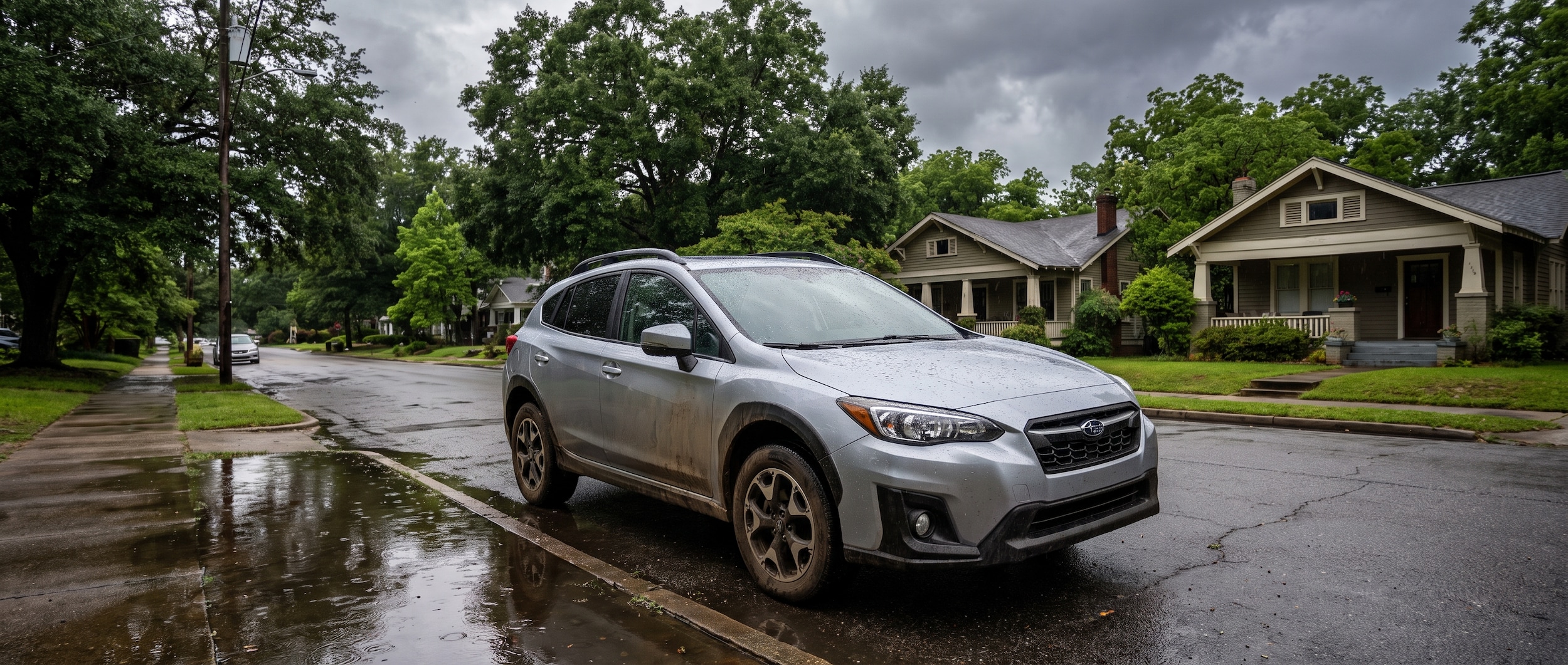
If you're shopping a used Crosstrek around Birmingham, here's the short version. The 2020, 2021, and 2022 model years are where we'd start, the 2018 and 2019 carry documented issues you need to know before you negotiate, and the 2024-and-up third-gen cars are real options but come with a specific build-date caveat. Here's why, with the numbers to back it up.
Browse our current used Crosstrek inventory
The short version
- Sweet spot: 2020, 2021, and 2022 model years offer the best combination of documented reliability and available features in the second generation.
- The 2020 gasoline Crosstrek recorded zero NHTSA recalls, per NHTSA data, the cleanest record in the model's second generation.
- 2021 was the year Subaru added the optional 2.5-liter engine to the Crosstrek lineup: more responsive off the line and worth seeking out if you find it.
- Watch the 2018 and 2019: both carry multiple NHTSA recalls and elevated complaint volumes, with the 2019 drawing 177 NHTSA owner complaints, most in the model's history.
- If you're looking at a 2024 or newer, confirm the vehicle was built after February 2024 to avoid an early-production rear seatbelt recall.
Which Years Are the Crosstrek Sweet Spot for Used Buyers?
The 2020, 2021, and 2022 model years are where the second-generation Crosstrek hit its stride, clean on paper and settled on the used market. The 2020 gas model logged zero NHTSA recalls, and NHTSA data puts its owner complaint volume at the lowest of the entire second generation. Both facts matter when you're buying used and need to know what's already surfaced in the field.
In 2021, Subaru brought a real mechanical upgrade, adding the 2.5-liter BOXER engine as an option on the Sport and Limited trims, up from the base 2.0-liter that powered every Crosstrek from 2013 through 2020. If you're commuting on US-280 through Mountain Brook or merging onto I-20, that extra low-end torque is a genuine upgrade in feel. Not every 2021 on the lot will have it (the Base and Premium kept the 2.0-liter), so check the trim before you commit.
The 2022 holds all the same strengths, a mid-cycle car with the 2.5-liter on upper trims, no significant new recall activity beyond the 2021's single inhibitor-switch campaign, and just enough age to have settled in on the used market. The 2023 is the final year of the second generation and worth a look if you can find one (the supply is thinner because fewer people have traded them in yet).
| Model Year | Generation | Engine Options | NHTSA Recalls | Our Take |
|---|---|---|---|---|
| 2018 | 2nd gen (launch) | 2.0L only | 5 campaigns | Years to Watch |
| 2019 | 2nd gen | 2.0L only | 6 campaigns | Years to Watch |
| 2020 | 2nd gen | 2.0L only | 0 (gas model) | Sweet Spot |
| 2021 | 2nd gen (facelift) | 2.0L or 2.5L | 1 (inhibitor switch) | Sweet Spot |
| 2022 | 2nd gen | 2.0L or 2.5L | 1 (inherited from 2021) | Sweet Spot |
| 2023 | 2nd gen (final) | 2.0L or 2.5L | Limited history | Consider |
| 2024+ | 3rd gen | 2.0L or 2.5L | Build-date caveat | Consider with VIN check |
The 2020 gas Crosstrek is the single cleanest model year in the second generation by NHTSA recall count: zero campaigns on record, per NHTSA data.
See What Your Current Vehicle Is Worth
Which Crosstrek Years Should You Watch Out For?
The 2018 and 2019 are the two years that draw the most attention in the NHTSA data, and that's a cue to do your homework before you negotiate rather than a walk-away signal on its own. A well-maintained example with completed repairs can still be a smart buy. Verify recall completion before you sign.
As the launch year of the second generation, the 2018 carried development risk, and launch years usually do. NHTSA records list five recall campaigns for the 2018 Crosstrek, the highest recall count of any single model year in the nameplate's history. Three of them stand out.
- ECM recall: the engine control module could continue powering the ignition coil after shutdown, creating a short-circuit and stall risk.
- PCV valve recall: the valve could separate, allowing components to enter the engine with potential power loss.
- Rear stabilizer bracket bolt issue: a separate structural concern addressed under the same free-of-charge repair program.
Subaru repaired all of these free of charge, but a used 2018 you're looking at today needs documentation that those repairs were completed. Get that in writing.
The 2019 is more complicated. It carried over most of the 2018's recall exposure and added its own. NHTSA received 177 owner complaints against the 2019 Crosstrek, the most logged against any single model year in the nameplate's history. The dominant issue was windshield cracking, and NHTSA complaint filings put visibility-related complaints (windshield) at a substantial share of all 2019 complaints. Here's why that matters in the Birmingham market specifically. EyeSight, Subaru's camera-based driver assist system, uses cameras mounted to the windshield. When an EyeSight-equipped windshield gets replaced (whether from a crack or road impact), the system requires professional recalibration. Add the recalibration to the glass itself and the bill climbs. On a used car you're already paying for, that's a cost you want behind you, not ahead of you.
Compare the Crosstrek to the used Forester if cargo space is a priority
The 2019 also had a rear door window tempering recall (NHTSA notes the left rear window glass in certain units wasn't properly tempered during manufacturing) and shared the ECM ignition coil recall with the 2018. A clean NHTSA VIN check and documentation of completed repairs can rehabilitate a well-maintained 2018 or 2019. But they take more homework than the 2020-2022 range.
As for the first generation (2013-2017), these are older cars now, and a good 2015, 2016, or 2017 can still be a solid buy if the miles and service history work out.
- The 2017 was the last year of the first gen and benefits from ironed-out production.
- All first-gen Crosstreks ran the 2.0-liter. Ground clearance was 8.7 inches, the same as second-gen standard models.
- NHTSA records tie 2013-2017 Crosstreks to a brake light switch recall involving contamination that could prevent lights from illuminating. Verify completion.
One honest note on the first gen. They're approaching ten-plus years old, and at that mileage threshold, CVT condition matters. Ask about transmission service history.
Explore financing options for your used Crosstrek purchase
Pros and Cons of Buying a Used Second-Gen Crosstrek (2018-2023)
| Pros | Cons |
|---|---|
| Symmetrical AWD standard on every trim, every year | 2018-2019 recall history requires thorough VIN verification |
| 8.7 inches of ground clearance handles wet roads and uneven terrain | 2019 windshield vulnerability adds potential cost on EyeSight-equipped models |
| 2.5-liter engine option from 2021 onward meaningfully improves responsiveness | 2.0-liter-only years (2018-2020) feel modest at highway merge speeds |
| EyeSight driver assist available across the range (standard on some trims, optional on others) | EyeSight windshield replacements require camera recalibration, an additional cost |
| Strong resale retention means the value you buy at is largely preserved | Strong resale retention means used prices run higher than comparable-size crossovers |
What About Third-Gen Crosstreks (2024 and Newer)?
The third generation arrived for 2024 as a genuine redesign, and it's a strong used option with standard EyeSight and a sharper all-wheel-drive system, though the earliest 2024 builds carry one specific rear-seatbelt caveat you'll want to confirm before you buy. The redesign brought fresh styling, standard EyeSight across every trim (it's no longer tier-dependent), an AWD system Subaru describes as quicker to respond, and standard X-MODE with Hill Descent Control. Ground clearance holds at 8.7 inches on standard trims, and the Wilderness edition bumps it to 9.3 inches.
There's one nuance worth knowing on early 2024 units. NHTSA records show Subaru modified rear seatbelts on certain 2024 Crosstreks to improve occupant protection in moderate-overlap frontal crashes, and the change went in during production in February 2024. The practical move is to check the manufacturer sticker on the driver's door jamb and confirm the build date. Anything built after February 2024 cleared that concern on the line.
By 2025, Subaru standardized the 2.5-liter engine on Premium and upper trims. The 2026 Crosstrek, now the current model year, made the 2.5-liter standard across the entire line. Used 2024s are still around, though they're commanding near-new pricing in most markets.
Which Year Fits Which Birmingham Buyer?
Matching a buyer to a model year comes down to how you drive and what tradeoffs you'll accept, so here's how we'd line up four common profiles against Birmingham's roads and the verified data, with the reminder that a clean VIN report can move any of these picks either direction.
See available used Subaru inventory at Hallmark Subaru Birmingham
The value-first buyer who wants proven reliability: Start with a 2020. Zero recalls on the gas model, the lowest documented complaint volume of the second generation, and enough age to have come down from peak used-car pricing.
- The 2.0-liter is adequate for daily use.
- You're not getting the extra torque of the 2.5-liter, though you're not paying for it either.
- Budget has room to allocate toward service records and extended maintenance coverage.
The buyer who commutes I-20 or US-280 and wants more punch: Find a 2021 or 2022 Sport or Limited. The 2.0-liter feels underpowered at highway merge speeds. The 2.5-liter engine is the difference between a car that keeps up and one that can finally get out of its own way. Those models also carry the dual-function X-MODE on Sport and Limited, which matters if you're heading onto gravel roads toward the foothills on weekends.
The buyer navigating Birmingham's rare ice events: On slick pavement, any Crosstrek from 2018 onward does what symmetrical AWD is built to do. Birmingham doesn't treat I-20 or I-59 the way northern cities treat their highways, because ice here is genuinely infrequent. And that's exactly when AWD earns its keep. The surface is slick, the road isn't brined, and the AWD system works continuously rather than waiting for a wheel to slip before engaging. For a city where a half-inch of ice shuts things down for two days, that distinction is meaningful.
The buyer eyeing a 2023 or 2024: Both are solid, and you're in good shape either way. The 2023 is the final year of a well-ironed second generation. The 2024 is genuinely redesigned and brings standard EyeSight across all trims (a real improvement). Just run the VIN, confirm recall completion, and verify build date on early 2024 units as noted above.
In every case, pull the NHTSA VIN lookup before you make an offer. It takes three minutes and tells you exactly which recall campaigns apply to the specific vehicle you're looking at, not just the model year.
Frequently Asked Questions
Is a used Subaru Crosstrek reliable?
The Crosstrek has a strong overall reliability record across its production history. Per NHTSA data, the 2020 gasoline model logged zero recall campaigns, and IIHS awarded Top Safety Pick or Top Safety Pick Plus status to Crosstrek models from 2013 through 2023. Model-year selection matters: the 2018 and 2019 carry documented recall histories that deserve a thorough VIN check, while the 2020, 2021, and 2022 represent the model at its most settled.
Does every used Crosstrek come with all-wheel drive?
Yes. Subaru Symmetrical All-Wheel Drive has been standard equipment on every Crosstrek trim level across every model year since the nameplate launched in 2013. There is no front-wheel-drive Crosstrek. Ground clearance is 8.7 inches on standard trims (all generations), and 9.3 inches on the Wilderness edition (available from 2024 onward).
What is EyeSight and which used Crosstreks have it?
EyeSight is Subaru's camera-based driver assist system. It includes automatic pre-collision braking, adaptive cruise control, and lane departure warning, among other features. In the second generation (2018-2023), EyeSight was available but not universally standard: it depended on the trim level. In the third generation (2024 and newer), Subaru made EyeSight standard on every trim. If EyeSight is a priority for you and budget points you toward an older model, verify it's included on the specific trim you're considering rather than assuming.
Categories:
Social