
When you run a mobile pet-care business, your vehicle isn't just transportation. It's a rolling warehouse, a client-facing first impression, and the one thing that can't break down halfway through a Tuesday route in Irondale when you've got three more appointments queued. Picking the right Subaru here has little to do with chasing the most features for the money in the abstract. The job rewards the specs that serve a working day. You want a cargo floor that swallows a table and a soft crate, a liftgate low enough to load heavy gear without wrecking your back, and an AWD system that doesn't flinch when a Birmingham afternoon storm rolls in with zero warning.
Our bottom line is simple. If you're running solo, the 2027 Subaru Forester is the strongest match, with the most usable cargo geometry in the lineup and standard symmetrical all-wheel drive across every trim. Tow a trailer setup and the Outback earns a serious look. A solo operator rarely needs the Ascent.
What Do You Actually Get at Each Tier?
The three Subaru models worth evaluating here sort out on cargo shape, liftover height, and what happens when you fold the seats far more than on raw feature count, which is what decides the tier for someone loading grooming equipment every morning. You'll see how the three stack up below.
| Model | Cargo (Seats Up) | Max Cargo (Seats Folded) | Liftover Height | AWD | Who It's For |
|---|---|---|---|---|---|
| 2027 Forester Base / Premium | 29.6 / 27.5 cu ft | 74.4 / 69.1 cu ft | 28.9 in | Symmetrical AWD std | Solo operator, gear in cargo only |
| 2027 Forester Wilderness | 27.5 cu ft | 69.1 cu ft | 29.5 in | Symmetrical AWD + X-MODE | Operator with rural/uneven-driveway routes |
| 2027 Subaru Outback | ~32.5 cu ft | ~75.7 cu ft | ~31 in | Symmetrical AWD std | Operator towing a small trailer |
| 2027 Subaru Ascent | ~17.6 cu ft | ~86.0 cu ft | ~33 in | Symmetrical AWD std | Team operation, 2-3 people + gear |
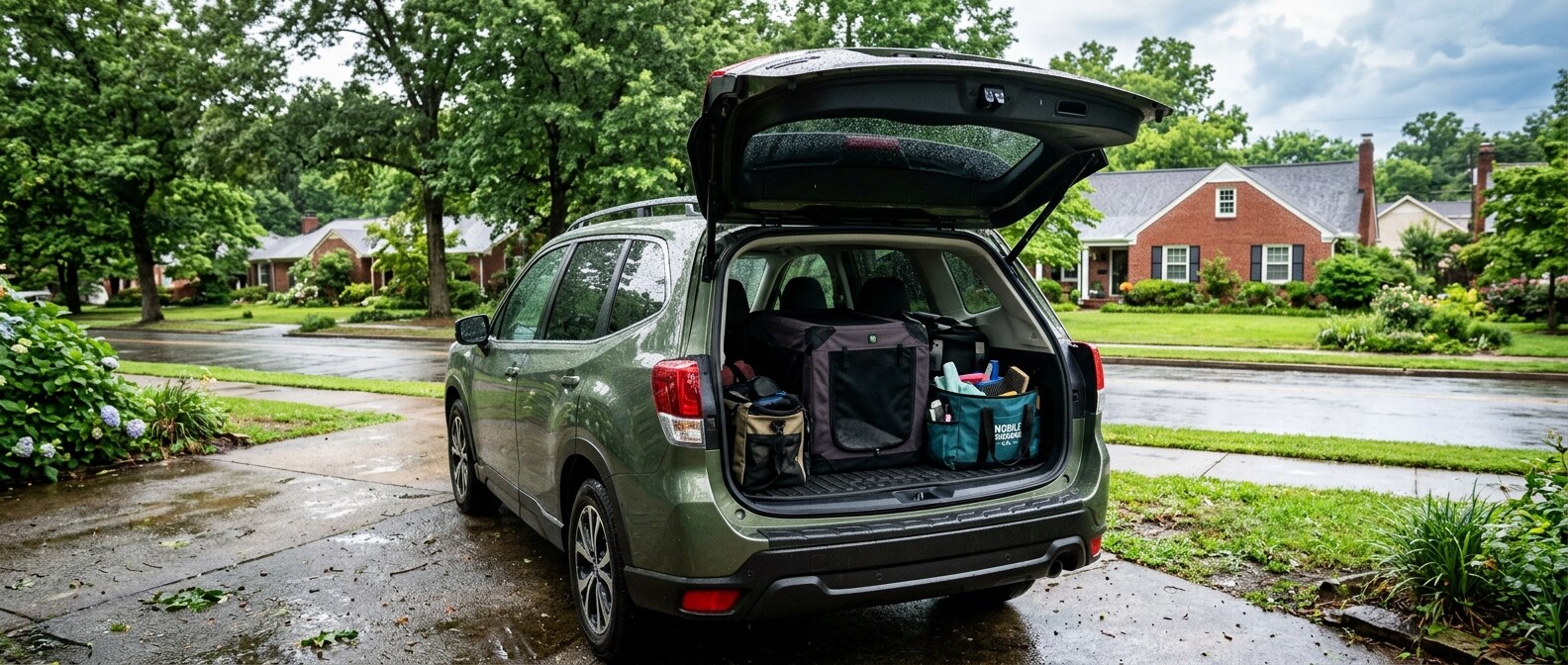
A quick note on the Forester Base. Its 29.6 cubic feet behind the rear seats and 74.4 cubic feet with seats folded flat come specifically because it ships without the panoramic moonroof. Every other Forester trim trades a few cubic feet for that roof. If you're running gear in the cargo area every day and never carrying passengers in row two, the Base's flat, unobstructed floor is a genuine working advantage. The cargo opening measures 43.3 inches wide. Loading a soft-sided crate solo gets easier.
Reliability for Route Work Means More Than Mileage
For route work, reliability shows up in how the drivetrain behaves when conditions turn, and Subaru's symmetrical all-wheel drive handles that by running continuously rather than waiting for you to switch it on. The system runs the whole time, and you've got torque at all four wheels from the moment you pull out of the driveway.
Birmingham's summer storm pattern is legitimately unpredictable, and you can't always plan around it. An afternoon in late July can go from clear to standing water on I-20 in about twenty minutes. The weather turns fast. A vehicle that handles wet pavement consistently, without driver input, is simply a less stressful tool for a full day of residential stops across the metro.
The 2027 Forester's 2.5-liter BOXER engine produces 180 horsepower and 178 lb-ft of torque. With a loaded cargo floor it won't feel sporty, and we won't pretend otherwise. What it does do is move reliably, run on regular-grade fuel, and return reasonable efficiency across a mix of neighborhood streets and highway segments between appointments. The 16.6-gallon tank keeps fuel stops short.
For operators whose routes include steeper driveways, unpaved access lanes, or hillside neighborhoods in the eastern suburbs, the standard 8.7 inches of ground clearance handles the uneven terrain of older Birmingham residential areas without any fuss. The Wilderness trim pushes that to 9.3 inches and adds X-MODE for genuinely rough terrain, but most urban and suburban routes won't need it.
When the Outback Makes More Sense
The Outback makes more sense the moment your mobile setup involves a trailer, since a proper grooming trailer separates your workspace from the tow vehicle and keeps the gear out of the cargo area, though that edge fades fast if you're loading equipment straight into the SUV. Its slightly higher liftover height (around 31 inches) matters less when the work happens outside the vehicle.
We'll say plainly, if you're a solo operator using the SUV as pure transport with gear loaded directly in the cargo area, the Outback's extra length works against you in tight residential driveways and street parking. The Forester is easier to place. The Outback suits a longer route where the workspace isn't the vehicle.
The Ascent is a three-row SUV built for seven or eight passengers. Fold the third row and its cargo numbers get seriously impressive. For a solo operator, though, that third row is dead weight, and the Ascent's footprint makes the narrower streets in older Birmingham neighborhoods harder to navigate. It earns its place in a team setup where multiple groomers share a vehicle between appointments. Solo, it's too much car.
The Smart Choice for a Birmingham Working Route
The Forester is the smart pick for a Birmingham working route because its flat cargo floor at 28.9 inches off the ground is a spec you'll touch every single workday, though it stops being the answer the moment your work has to happen inside the vehicle rather than load gear and drive.
Check the two numbers you touch most. Standard symmetrical AWD means you're not making a weather call before you leave the house, and the Forester fits in a standard parking space, which matters when you're pulling into residential driveways seven or eight times a day.
The limitation is worth stating up front. The Forester moves you and your gear between stops, and that's the whole job it does. A full-service mobile grooming setup still needs either a converted van or a trailer behind a tow vehicle. For operators running a leash-and-bath mobile service, a house-call vet tech, a pet-sitting professional, or someone early in a grooming business who works from portable equipment, the Forester handles the day without the overhead of a commercial vehicle. If your work has to happen inside the vehicle, it won't be the one.
Subaru's financing team can walk through options if you're weighing this as a business vehicle. And if you're coming out of a larger work vehicle and want to size up the trade-in side, our trade-up program gives you a starting point before you step into anything new.
Frequently Asked Questions
Does the 2027 Subaru Forester have enough cargo space for mobile pet-care equipment?
The 2027 Forester Base offers 29.6 cubic feet of cargo space with the rear seats in place and 74.4 cubic feet with them folded flat. You'll get room for a soft-sided crate, a grooming bag, and portable equipment for a solo operator who works from a portable setup rather than inside the vehicle. The cargo opening is 43.3 inches wide and the liftover height is 28.9 inches, which makes loading heavy gear without help more manageable than in a taller cargo vehicle. If you need to work inside the vehicle, look elsewhere. The Forester is transport and storage, not a grooming salon on wheels.
Is Subaru AWD actually useful for a Birmingham driving route?
Yes, and the reason is specific to this climate. Birmingham's summer afternoon thunderstorms can put standing water on major corridors in a short window, and the city's occasional winter ice events tend to catch drivers off guard because they happen so rarely. Subaru's symmetrical all-wheel drive runs without you activating a mode. The system distributes power to all four wheels continuously. Consistent behavior on wet pavement is what makes it useful for a route-based professional driving in and out of residential neighborhoods all day who doesn't want to make a go/no-go call every time the sky darkens.